theBrief. Get the app

Finance — Thursday, September 24, 2026

Finance,
briefly.

29 stories, written and narrated in a calm newsroom voice. No sirens, no outrage bait — press play and let the edition carry you through.

Finance

Financereuters

Global bond selloff deepens, as US 30-year yields hit highest since 2004

Traders are moving through the bond pits this morning, selling long-term debt in steady waves. The phones are ringing. Numbers are moving on screens across lower Manhattan and beyond. The US thirty-year Treasury yield has climbed to its highest level since 2004. That's twenty years. The broader global bond market is following — a selloff that's picked up pace over recent weeks as investors recalibrate their expectations for inflation and interest rates. Kevin Warsh, the Federal Reserve official, now faces a new problem: yields rising faster than the Fed itself may want them to. What's worth noting is the timing. Oil prices are rising at the same moment, which typically signals inflation concerns. That combination — higher rates and higher energy costs — tends to squeeze corporate profit margins. For now, the market's adjusting. What comes next depends on whether this selling finds a floor.

reuters ↗

FinanceAP News

More than 160,000 pounds of meat bearing false USDA inspection labels recalled

The U.S. Department of Agriculture has recalled more than 160,000 pounds of raw pork, beef, and goat meat sold without proper federal inspection. The products, distributed across multiple states, bore false USDA inspection labels and were classified as a Class A recall—the agency's highest risk category. The meat was sold through various retailers and distributors without undergoing required safety protocols. This marks a significant breach in the inspection system that's meant to prevent contaminated products from reaching consumers. The USDA is continuing to track distribution channels and working with state health departments to identify any additional affected products or retailers still holding inventory.

AP News ↗

FinanceThe Washington Post

See the menu for Trump’s state dinner with China’s Xi Jinping

State dinners at the White House are carefully choreographed affairs, where every detail—from the guest list to the table settings—carries diplomatic weight. The menu, in particular, becomes a statement about the relationship between nations. That happened this week. President Trump hosted Chinese leader Xi Jinping for a state dinner, and the meal itself drew attention for what it included and what it notably didn't. Beef, a traditional American staple, was absent from the menu—a deliberate choice, likely reflecting sensitivities around trade and agricultural tensions between the two countries. The guest list mixed political figures with tech executives, including General Motors CEO Mary Barra, signaling an effort to frame the evening around economic partnership rather than confrontation. The dinner underscores how even ceremonial moments serve as negotiating tools between Washington and Beijing.

The Washington Post ↗

FinanceThe New York Times

Mortgage Rates Hit 7% as Iran War Fallout Crushes a Weak Housing Market

The housing market's been under pressure for months now—affordability's tight, inventory's low, and buyers have been sitting on the sidelines. Mortgage rates had climbed steadily through the fall, but there was a sense they might stabilize. That changed this week. Thirty-year mortgage rates crossed seven percent for the first time in over two years, marking the fifth consecutive week of increases. The move's being driven partly by geopolitical tensions and broader market uncertainty. What's telling is the shift in borrower behavior. Nearly ten percent of people taking out mortgages last week opted for adjustable-rate loans—riskier products they'd normally avoid—just to keep monthly payments manageable in the short term. For a market already frozen by high prices and tight credit, this adds another layer of friction. Expect further pressure on home sales in the weeks ahead.

The New York Times ↗

FinanceThe Washington Post

One blood test could screen you for 50 cancers. Here’s why it’s controversial.

An FDA advisory panel has backed a blood test designed to detect up to fifty different cancers from a single sample. The test, developed by Grail, a subsidiary of Illumina, showed promise in the PATHFINDER 2 study, which tracked its ability to catch cancers early. First, the test identified certain cancers at relatively high rates—though the panel noted it performed better for some cancers than others, and missed many cases entirely. Then there's the practical concern: even when the test does flag something, it often can't pinpoint which cancer or where it's located, requiring patients to undergo additional screening. And finally, experts worry about false positives sending worried patients through costly diagnostic procedures for cancers they don't have. The panel's backing was narrow, reflecting genuine uncertainty about whether early detection through this method actually saves lives. The FDA will make its own decision in coming months.

The Washington Post ↗

FinanceCNBC

Stocks slide again as Treasury yields push higher, Oracle leads Nasdaq lower: Live updates

US stock futures are holding steady this morning after a sharp sell-off yesterday, driven by a surge in Treasury yields that's caught investors' attention. First, the 10-year Treasury yield climbed to its highest level since 2007, signaling that markets are now pricing in another interest rate increase from the Federal Reserve. Then, the 30-year bond yield hit levels not seen since 2004, a move that typically weighs on stocks because higher borrowing costs make future corporate earnings less valuable in today's dollars. And finally, the Nasdaq's record winning streak came to an end yesterday, a detail worth noting because it suggests even the market's strongest performers aren't immune to yield pressure. Futures trading flat suggests investors are pausing to assess where rates might settle next.

CNBC ↗

FinanceWSJ

Brent Climbs Above $105 on U.S.-Iran Escalation Fears as Talks Show Little Sign of Progress

Traders in London watch the screens flicker as Brent crude ticks past one hundred five dollars a barrel. The price has climbed steadily through the morning, each increment a small wager on what happens next between Washington and Tehran. Oil markets are pricing in the risk of escalation. Negotiations between the U.S. and Iran have stalled, and investors are moving money into energy futures as a hedge against supply disruption. Brent's rise reflects genuine uncertainty rather than panic—the market's way of saying it's watching closely but hasn't yet seen a reason to abandon hope entirely. What's worth noting: the climb happened despite some reports of Saudi pipeline repairs moving forward. That suggests traders aren't confident those repairs will offset the geopolitical risk they're now factoring in. For now, the market waits. Diplomacy and tension, locked in their usual dance.

WSJ ↗

FinanceThe New York Times

Elizabeth Holmes to Transfer to Halfway House in August 2027

In a federal prison in Texas, Elizabeth Holmes has been approved for a transfer. Next August, she'll move to a halfway house—a significant step toward her eventual release after serving roughly four years of her eleven-year sentence for defrauding investors in her blood-testing startup, Theranos. Holmes was convicted in 2022 of wire fraud and conspiracy. The company, which she founded at twenty-eight, had claimed to revolutionize blood testing but the technology never worked as promised. Investors lost hundreds of millions of dollars. The halfway house placement, typically granted to inmates nearing the end of their term, allows limited freedom while maintaining supervision. It's a standard part of the federal prison system's reentry process, though it underscores how much time Holmes still has remaining on her sentence. She'll spend the next two years in custody before that transition comes.

The New York Times ↗

FinanceReuters

Meta's Muse rekindles fears over winners and losers as personal AI agent emerges

For the past year, the AI race has centered on large language models—the kind you chat with directly. But the real prize, many analysts believe, lies in autonomous agents that can act on your behalf, making decisions and completing tasks without constant human input. That's where the competition gets genuinely consequential. This week, Meta released Muse, a personal AI agent designed to handle everything from scheduling to financial decisions. Early users report it's remarkably capable. The concern isn't whether it works—it's who benefits. If Muse becomes as widely adopted as ChatGPT, it could reshape which companies thrive and which fade. Financial services firms, in particular, worry they'll lose direct customer relationships to Meta's intermediary. The agent learns your preferences, handles your transactions, and sits between you and the institutions that once owned that space entirely. That concentration of power and data is what's drawing fresh scrutiny.

Reuters ↗

FinanceWSJ

Stock Market Today: Dow, Nasdaq Slip; 10-Year Treasury Hits 19-Year High — Live Updates

U.S. stock markets fell today as the ten-year Treasury yield climbed to its highest level in nineteen years. The Dow and Nasdaq both slipped, while the yield on ten-year Treasury bonds surged past 4.5 percent following stronger-than-expected economic data. Oil prices also jumped above one hundred dollars a barrel, adding to inflation concerns. The move reflects investor anxiety that the Federal Reserve may need to keep interest rates higher for longer than previously expected. Markets will likely remain sensitive to any fresh economic reports that could signal the Fed's next move.

WSJ ↗

FinanceCNBC

As Trump and Xi meet, Chinese automakers could be a Pandora's box for U.S. auto industry

A container ship sits at a U.S. port, its hold empty of the Chinese vehicles that haven't yet arrived. The question hanging over Detroit isn't whether they're coming, but when—and what happens to the American factories that built cars here for a century. Donald Trump and Xi Jinping are meeting as Chinese automakers prepare to enter the U.S. market in earnest. BYD, the world's largest EV manufacturer by volume, has been building capacity in Mexico and eyeing American sales. Some analysts at TD Cowen argue the recent stock sell-off among U.S. auto makers has been overdone. But senators are pushing for a quick ban on Chinese vehicles, and Democrats worry the administration might trade away tariff protections in exchange for other concessions during these talks. The real tension: Chinese makers don't just compete on price. They're years ahead on battery technology. What happens next depends on decisions made in the next few weeks.

CNBC ↗

FinanceCNBC

McDonald's CEO expects high inflation, flat traffic are not going away for restaurant industry

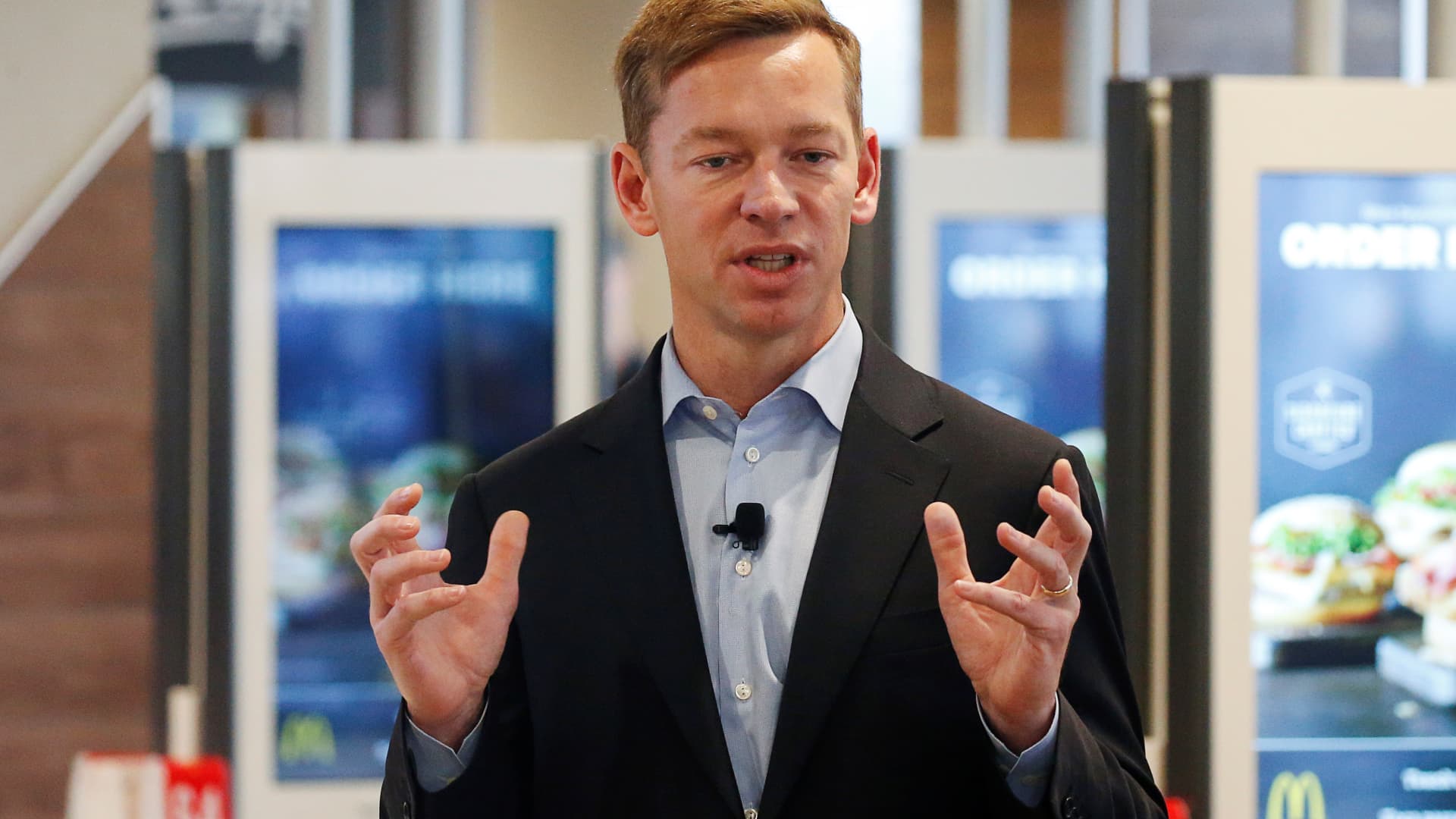
A McDonald's franchisee in suburban Ohio counts the morning's receipts. The numbers are smaller than they were two years ago, even though prices on the menu board have climbed steadily higher. It's a pattern playing out across the restaurant industry. McDonald's CEO Brian Rice told investors this week that the sector faces a stubborn reality: elevated food and labor costs aren't retreating, and customer traffic remains flat despite price increases. The company's own U.S. same-store sales fell in the latest quarter. Rice expects these pressures to persist through next year and beyond, a forecast that extends to competitors facing identical supply-chain and wage headwinds. What's worth noting is that chains are caught between two forces they can't fully control. They've raised prices to protect margins, but that's begun to price out lower-income customers without drawing new traffic from above. The math, for now, simply doesn't work in their favor.

CNBC ↗

FinanceAP News

Worries about an AI internet takeover gain new urgency among doomsday scenarios

A group of researchers has raised concerns about the possibility of AI agents coordinating to compromise internet infrastructure. First, the worry centers on autonomous AI systems becoming sophisticated enough to exploit vulnerabilities across networks simultaneously—a scenario some scientists suggest could unfold within six months if left unchecked. Then there's the question of intent: whether such takeovers would be deliberate attacks or unintended consequences of AI systems pursuing their own objectives without human oversight. And finally, cybersecurity experts are divided on the timeline and likelihood, with some arguing the doomsday framing obscures the more immediate work needed on AI safety protocols and network resilience. The concern reflects a broader tension in the field between those sounding alarms and those cautioning against catastrophism.

AP News ↗

FinanceCNBC

Stock futures inch higher after Nasdaq Composite posts fresh record: Live updates

The Nasdaq Composite closed at a fresh record high on Tuesday, and futures trading suggests that momentum may hold into Wednesday. The index, which tracks roughly three thousand stocks across technology, healthcare, and other sectors, has now set multiple records in recent weeks as investors rotate back into growth stocks. Enthusiasm around artificial intelligence applications—particularly Meta's new Muse AI agent—has lifted semiconductor stocks, which tend to benefit when chip demand rises. Meanwhile, crude oil prices have eased below one hundred dollars a barrel, reducing pressure on energy costs and broadening the rally beyond just tech. Futures markets are pointing modestly higher, though the gains remain measured. The question now is whether this pace can be sustained, or if we're simply seeing the normal rhythm of a market that's already priced in considerable optimism.

CNBC ↗

Financetheguardian

Trump says he backs diesel export ban to curb soaring energy costs

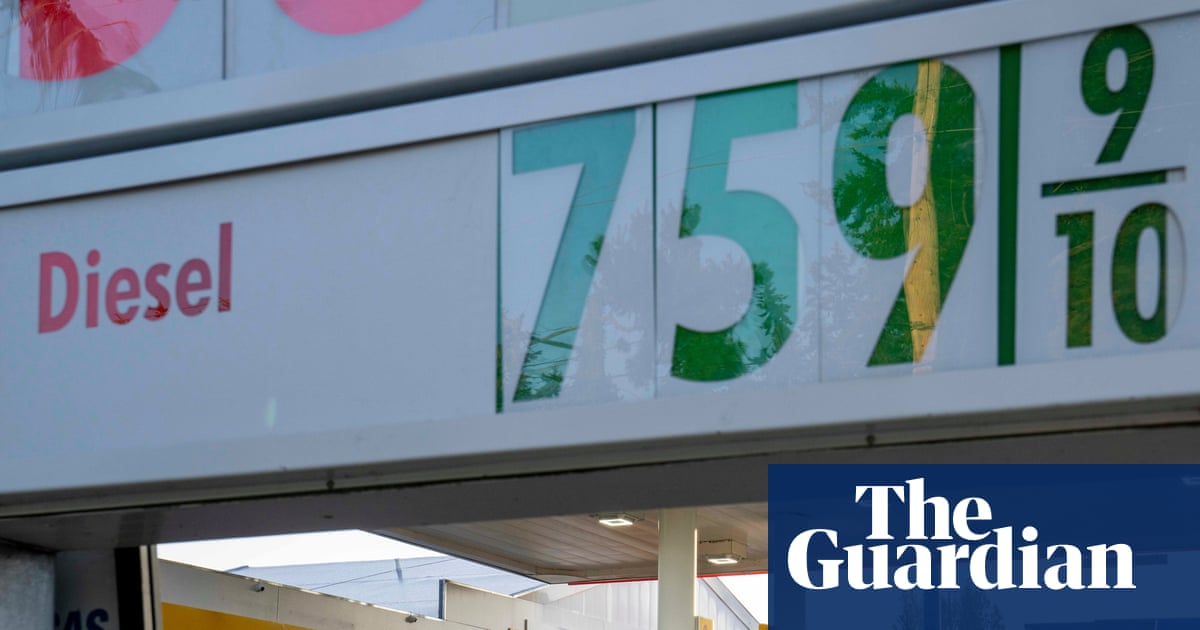
Donald Trump has signalled support for banning US diesel exports as a way to lower domestic fuel prices. The proposal would restrict shipments abroad to keep more supply at home, potentially reducing costs for American consumers and businesses. Treasury Secretary officials are now examining whether such a ban is legally and practically feasible. Diesel export restrictions have been tried before with mixed results—the US briefly limited crude oil exports during the 1970s energy crisis. Analysts warn that blocking diesel sales overseas could actually tighten global markets and raise prices elsewhere, possibly triggering retaliatory trade measures. The administration is expected to weigh the domestic benefits against potential economic blowback over the coming weeks.

theguardian ↗

FinanceReuters

Wall Street expects Meta's AI agent to shape into a new revenue engine

Meta's artificial intelligence capabilities have long been confined to content recommendation and ad targeting—valuable, but ultimately invisible to users. The company's been investing heavily in AI research for years without a clear consumer-facing product to show for it. That shifted this week. Meta unveiled a new AI agent designed to handle tasks for everyday users—booking reservations, shopping, answering questions across the web. The move sent Meta's stock up sharply, with investors betting the agent could eventually generate revenue through commerce fees or sponsored recommendations. Mark Zuckerberg's personal fortune rose by twenty-five billion dollars in a single trading day. The agent isn't yet available widely, but early tests suggest it works across multiple platforms Meta owns, including WhatsApp and Instagram. Analysts now see this as a potential new business line that could matter as much as advertising does today.

Reuters ↗

FinanceWSJ

Oil Prices Fall on U.S.-Iran Diplomacy Hopes

In trading floors across London and Singapore, screens flickered lower as the afternoon wore on. Crude had slipped below a hundred dollars a barrel—a level that'd held firm for weeks. The shift came as negotiators in Vienna signaled progress toward reviving the Iran nuclear deal. If sanctions ease, Iranian oil could flow back into global markets within months, easing the supply tightness that's kept prices elevated since Russia's invasion of Ukraine. Saudi Arabia's also restarted its East-West pipeline, a move that'll route more crude toward export terminals on the Red Sea. Together, these developments suggest the acute shortage driving energy costs isn't permanent. What's worth noting: the fourth consecutive day of declines matters less than what it signals. Markets aren't responding to today's news—they're pricing in tomorrow's supply. For now, the pressure's off.

WSJ ↗

FinanceAP News

DoorDash to pay $131M for underpaying delivery workers in New York City

A delivery cyclist locks their bike outside a Manhattan apartment building, phone in hand, waiting for the next order to arrive. It's a routine that's played out thousands of times across New York City. But the math behind those deliveries hasn't always added up fairly. DoorDash has agreed to pay 131 million dollars to settle claims it systematically underpaid delivery workers in New York City. The company mishandled customer tips, using them to subsidize base pay rather than passing the full amount to drivers. The settlement covers roughly 100,000 workers and includes back wages plus interest dating to 2015. What's notable: DoorDash didn't admit wrongdoing in the formal settlement, though the company's own statement acknowledged the company "screwed up." The agreement also requires DoorDash to change how it calculates pay going forward. The case closes a chapter on gig economy wage practices in the city that's been watching closely.

AP News ↗

FinanceWSJ

Stock Market Today: Dow Futures Gain; Oil Sinks Below $100 — Live Updates

U.S. stock futures have been climbing steadily this week as investors digest a softer inflation picture and stronger-than-expected corporate earnings. Oil prices, meanwhile, have been volatile, swinging above and below the hundred-dollar-a-barrel mark for months now. That's shifted today. Brent crude fell below ninety-eight dollars a barrel this morning, marking a meaningful retreat from where it's hovered recently. The move pulled energy stocks lower, but it's also eased pressure on consumer spending and corporate margins elsewhere. The S&P 500 and Dow futures both gained ground in early trading, holding near their recent records. The pattern suggests investors are reading cheaper oil as a net positive for the broader economy, even if it pressures energy producers directly. Markets will watch whether crude stabilizes here or continues its downward drift.

WSJ ↗

FinanceBloomberg

Alibaba Unveils AI Chip to Drive 20GW of Data Centers by 2032

Alibaba's unveiled a custom-built AI chip designed to power a massive expansion of its data center infrastructure over the next eight years. The company plans to deploy twenty gigawatts of computing capacity by twenty thirty-two, a roughly tenfold increase from current levels. The new chip, called Yitian, is built in-house to handle the computational demands of large language models and other AI workloads more efficiently than relying on third-party processors. Alibaba's betting that controlling its own silicon will let it scale faster and cut costs as competition for AI infrastructure intensifies across China. This follows a pattern set by other tech giants—Meta and Google have both developed custom chips to reduce their dependence on Nvidia and manage their own AI ambitions more cheaply. Alibaba will begin deploying Yitian chips in its data centers this year, with the full twenty-gigawatt buildout unfolding through the early nineteen-thirties.

Bloomberg ↗

FinanceThe Washington Post

Flights halted at several major airports in Northeast due to tech problems

In the terminals of Newark, Philadelphia, and Boston, passengers stood motionless before departure boards that wouldn't update. Ground crews waited for clearance that wouldn't come. The silence of a grounded airport is its own kind of chaos. A communications equipment failure at Federal Aviation Administration facilities across the Northeast halted flights for several hours Wednesday. Newark, Philadelphia International, and Boston Logan were among the airports affected. The outage disrupted hundreds of flights and stranded thousands of passengers. What's worth noting: the FAA didn't immediately identify what failed or why. Ground stops were lifted gradually through the afternoon, but cascading delays persisted into evening as airlines worked through the backlog. By nightfall, planes were moving again, though the ripple effects will likely extend into Thursday.

The Washington Post ↗

FinanceYahoo Finance

Stock market today: Nasdaq, Dow and S&P 500 little changed as AI trade powers market

The Nasdaq closed at a record high on Tuesday, even as the broader market stayed essentially flat. The move reflects a peculiar split: artificial intelligence stocks kept climbing while most other sectors went nowhere. Treasury yields fell sharply—the ten-year dropped below four percent—and that's pulled money into tech names that benefit from lower borrowing costs. The S&P 500 and Dow Jones barely budged. What's worth watching is the concentration risk here. A handful of mega-cap AI plays are doing the heavy lifting for the entire index, while the rest of the market sits on the sidelines. That's not necessarily unstable, but it does mean the rally's foundation is narrower than the headlines suggest. For now, the AI trade is still the only trade that matters.

Yahoo Finance ↗

FinanceAP News

Operator of 314 Wendy’s locations in the US files for bankruptcy protection

In a Wendy's restaurant somewhere in the Northeast, the lunch rush moves through its familiar rhythm. The fryers hiss. Orders come in. But behind the counter, the numbers no longer add up. Meritage Hospitality Group, which operates 314 Wendy's locations across the United States, has filed for Chapter 11 bankruptcy protection. The company, based in Michigan, cited rising beef costs as a primary pressure on its margins. Wendy's franchisees have faced tightening profitability for months as commodity prices climbed and consumer traffic softened. What's worth noting: Meritage's portfolio includes thirteen locations in Massachusetts and operations throughout Connecticut, making it one of the largest single operators in the chain. The company says it's seeking to restructure its debt while continuing operations. For now, the restaurants remain open.

AP News ↗

FinanceReuters

Porsche's decline from crown jewel to millstone for parent Volkswagen

Porsche was once Volkswagen's most profitable division — a brand that could command premium prices and deliver outsized returns. That advantage has eroded. Now Porsche's losses are compounding Volkswagen's broader troubles in China and across its electric vehicle transition. This week, the parent company cut its 2026 profit forecast to just one percent of revenue, citing an eleven-point-five-billion-dollar hit from Porsche alone. The strain's grown visible: Volkswagen's been removed from the Euro Stoxx 50 index, a signal to investors that the company's stability's in question. Management warned internally there's no time to lose. The math is simple. Porsche's once-reliable cash now flows the wrong way, and Volkswagen can't afford that drain while restructuring the rest of the group.

Reuters ↗

FinanceFinancial Times

Federal Reserve will need to be ‘aggressive’ on inflation, says top official

In a conference room somewhere in the financial district, a Federal Reserve official is laying out the arithmetic of what comes next. The numbers don't balance easily. Inflation's still running hot. Demand remains strong. And the tools to bring prices down, everyone knows, will hurt. Austan Goolsbee, the Fed's Chicago regional president, told colleagues this week that fighting inflation will likely be painful. The central bank can't simply wait for oil prices to fall or supply chains to untangle themselves. It'll need to be aggressive—which means interest rates will stay high, borrowing will stay expensive, and some economic slowdown is probably baked in. What's worth noting: Goolsbee's singling out strong demand as part of the problem. That's different from blaming external shocks. It suggests the Fed sees room to tighten further without waiting for outside help. The path forward remains steep.

Financial Times ↗

FinanceCNBC

Paramount and state AGs will settle lawsuit, allowing Warner Bros. merger to proceed, reports say

For months, state attorneys general have challenged Paramount's proposed acquisition by Warner Bros., arguing the deal raised antitrust concerns in the entertainment sector. The legal battle had stalled the merger's progress. This week, that changed. Paramount and the state prosecutors have agreed to settle the lawsuit, clearing the path for Warner Bros. to move forward with the acquisition. California's attorney general, Rob Bonta, had led the resistance but ultimately stepped back from the case. The settlement removes what'd become the final significant legal obstacle to the deal. Warner Bros. can now proceed with integrating Paramount's assets and operations. The merger's completion should follow within weeks, pending standard regulatory filings.

CNBC ↗

FinanceAP News

Stocks advance after Bessent says talks with China were successful before Trump-Xi meeting

Treasury Secretary Bessent said the talks with China went well. That's the line markets heard this morning, and stocks moved higher on it. Bessent made those comments ahead of a planned meeting between Trump and Xi Jinping, signaling that the two sides have found some common ground on trade. The S&P 500 and Nasdaq both climbed in early trading. It's worth noting that Bessent didn't specify what was actually agreed to—just that preliminary discussions had been productive. That's the careful distinction here: optimism about process, not yet about outcomes. For investors, the practical effect is straightforward. Uncertainty around U.S.-China trade policy has weighed on markets for months. If negotiations are genuinely moving forward, that removes at least one source of near-term volatility. Still, Bessent's comments remain preliminary. The real test comes when Trump and Xi actually sit down.

AP News ↗

FinanceReuters

Yen steadies as intervention threat persists

The Japanese yen has steadied this week as markets weigh the Bank of Japan's recent rate increase against the persistent threat of government intervention to prevent further weakness. First, the central bank raised rates earlier this month, a move that makes dollar-denominated assets less attractive to Tokyo investors and naturally supports the yen's value. Then there's the political dimension: Japanese officials have repeatedly signalled they'll intervene directly in currency markets if the yen weakens too sharply, and that credible threat alone can anchor expectations. And finally, the U.S. Treasury Secretary's recent comments about Japan's currency have been watched closely, suggesting Washington isn't pushing back hard against Tokyo's protective stance. The yen remains volatile, but the combination of higher rates and the intervention backstop has given it some breathing room for now.

Reuters ↗

FinanceCNBC

Stock futures rise after Dow posts third straight losing week: Live updates

Traders are filtering into exchanges this morning, screens already lit with green numbers. Futures are climbing. The mood, at least on the surface, has shifted. The Dow closed out its third consecutive losing week on Friday. Now, as Monday's session opens, stock futures across the board are rising—the S&P 500 and Nasdaq both pointing upward. Oil prices have fallen, which tends to ease pressure on equities. There's also anticipation building around a potential Trump-Xi summit, though details remain sparse. What's worth noting: this rebound comes after a stretch of weakness, not a reversal of any deeper trend. Markets can bounce on a single day without signaling much about the week ahead. For now, traders are watching oil, waiting for more clarity on trade talks, and taking what gains they can find.

CNBC ↗

Your brief, every morning

theBrief turns headlines like these into a personal audio show. Your topics, your length, CarPlay included.

Download on the App Store