theBrief. Get the app

Live Pulse — Wednesday, October 28, 2026

Live Pulse,
briefly.

10 stories, written and narrated in a calm newsroom voice. No sirens, no outrage bait — press play and let the edition carry you through.

Live Pulse

Newswired.com

Massive leak exposes 41,000 Homeland Security workers—including undercover ICE agents

A significant breach of Department of Homeland Security records has exposed personal details and operational information on more than forty-one thousand DHS employees and contractors. The leaked files include email addresses, phone numbers, and office locations, along with references to internal systems and details about undercover and surveillance operations. The records span DHS headquarters and seven component agencies, including Immigration and Customs Enforcement and US Customs and Border Protection. This represents the first major exposure of this scale for the department's workforce and organizational structure. DHS has not yet publicly commented on the breach or confirmed steps to notify affected employees.

wired.com ↗

Newsslate.com

We Finally Know Why Trump Has Tried So Hard to Hide the Epstein Files

Donald Trump's efforts to keep the Epstein files sealed are now clearer, following a House Judiciary Committee report released just before the midterm elections. First, Democrats claim a growing body of evidence shows Trump was an active participant in Jeffrey Epstein's sexual abuse of young women during the mid-to-late 1990s. Then, the committee alleges Trump leveraged his FBI and Justice Department to cover up that evidence. And finally, they've called for the appointment of a special prosecutor to investigate the matter. The timing—a week before elections already expected to challenge Republican prospects—underscores the political stakes surrounding the documents. What remains unresolved is whether such an appointment will move forward.

slate.com ↗

Hacker Newsformlabs.com

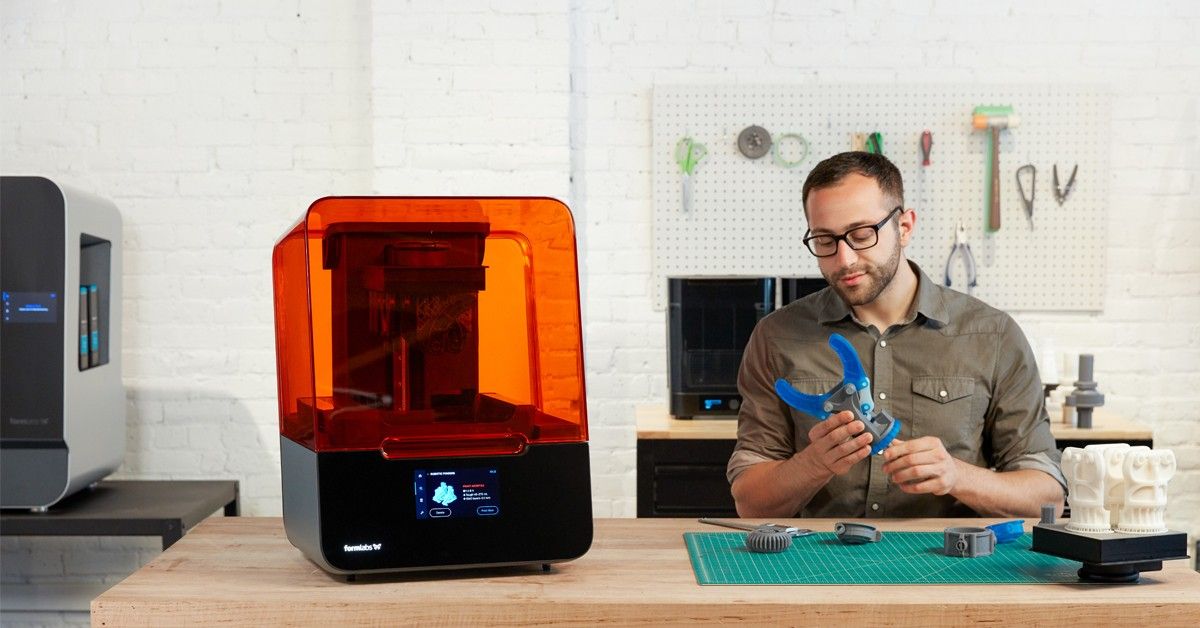
Formlabs Studio 1 $699 Resin Printer

A desktop printer sits quiet on a workbench, its resin tank catching the light. Inside, a miniature figure emerges layer by layer, detail sharp enough to see the seams of a tiny coat. Two hours from start to finish. Formlabs has released the Studio 1, a resin 3D printer priced at 699 dollars. It's aimed at hobbyists and small creators who want professional results without the industrial footprint or cost. Most prints finish in under two hours with what the company calls razor-sharp detail. The workflow handles the messy part of resin printing—the chemical exposure—by pairing the printer with a dedicated wash station and a VOC extractor. It's the first resin printer to carry UL GREENGUARD certification, meaning it's been tested for low chemical emissions. The printer works with an open platform, so you're not locked into Formlabs resins alone. A limited Founders' Edition run comes in three colors: Aqua, Teal, and Violet. The machine still requires a wash step after printing, but that's built into the workflow now, not an afterthought.

formlabs.com ↗

Hacker Newsblog.google

Gemini 4 Carbon

Google's announced Gemini 4 Carbon, calling it their strongest model yet, with particular strength in cybersecurity tasks. The model ranks first on Artificial Analysis Intelligence Index version 5.0, scoring 59 overall. On security-specific benchmarks, it achieves 88.2 percent on SEC-bench Pro for finding vulnerabilities, 54.8 percent on ExploitGym for exploitation, and 71.0 percent on CWE-bench for patching code flaws. This follows Gemini 4 Argon, which launched two weeks prior. Google's rolling out Carbon deliberately, starting this week with a subset of cyber defenders through their Fairwind Program, while working with the U.S. government on voluntary pre-release testing. The company says the model shows reduced hallucination and misalignment rates in live coding environments. Pricing matches Argon at two dollars per million input tokens. Full public access comes later, after the company gathers feedback on safeguards. Two frontier models in two weeks suggests the pace of development isn't slowing.

blog.google ↗

Hacker Newsnullpt.rs

Why is this fingerprinting script creating bioweapons?

Browser fingerprinting has become a standard tool for websites trying to identify users and block fraud. Libraries like FingerprintJS and anti-bot services from Cloudflare and Akamai do this by analyzing small differences in how each browser renders graphics and reports its capabilities. Most of these scripts are straightforward, drawing shapes and text onto digital canvases to create a unique signature. Now there's a catalog. A researcher crawled the top ten thousand websites using Playwright, intercepting the canvas fingerprinting calls that sites make. After filtering out routine uses, they collected over ten thousand distinct fingerprinting canvases and published them at fingerprint.garden. The collection includes implementations from FingerprintJS, Castle, and other commercial fingerprinting vendors, all in one searchable place. The archive serves as a reference for how fingerprinting actually works in the wild, beyond the documentation.

nullpt.rs ↗

Techwiki.alpinebsd.org

AlpineBSD

A new operating system called AlpineBSD combines the NetBSD kernel with a userspace inspired by Alpine Linux, with one explicit goal: to exclude AI-generated software from its base system and main repository. It's still in early development—there's no installer yet, though installation guides exist for those willing to experiment. The project ships with NetBSD's kernel and core tools, along with the apk-tools package manager and busybox. One thing to know upfront: NetBSD's hardware support is considerably thinner than Linux, so AlpineBSD won't necessarily run on every machine you have. The developers recommend checking NetBSD's supported hardware list before attempting installation, particularly for laptops. AlpineBSD uses the s6 init system for now, with plans to add OpenRC as an alternative. Its package collection is original, though many packages draw from Alpine's upstream sources.

wiki.alpinebsd.org ↗

Hacker Newscarmelitegothic.com

CNC Stone Carving

Computer numerically controlled machines are now being used to carve stone in the Gothic architectural tradition, a practice that might seem incongruous until you remember that medieval builders always adopted the best technology available to them. First, CNC machines have dramatically compressed the timeline for ornate stonework. Pieces that once took a skilled carver months to complete can now be finished in days, which means Gothic churches with their intricate details can be built within realistic budgets rather than abandoned as romantic impossibilities. Then there's the question of labor. Young people today grew up with computers, not chisels, so CNC technology channels their digital fluency toward something tangible—the construction of stone structures. And finally, these machines use diamond-tipped blades and milling bits to cut directly into stone, a relatively recent innovation that's distinct from water or laser methods. The parallel is worth noting: medieval builders didn't hesitate to embrace their era's innovations. Neither should we.

carmelitegothic.com ↗

Hacker Newssurgehq.ai

Dayjob: Tax – evaluating AI agents on 50 professional tax assignments

In a quiet office, Anna's question was straightforward: sell the condo in October or January. Two dates, one tax break potentially worth a quarter million dollars. An AI agent weighed both options and gave her an answer. It was correct, as far as it went. But there was something the agent didn't say. Buried in the tax code was a deadline—August 2027—after which Anna would lose eligibility for that exclusion entirely. One AI model, Opus, caught it every time across five attempts. Another, Astra, never did. This gap between answering the question asked and spotting the consequential issue is what researchers at Surge AI are measuring with DAYJOB: Tax, a new benchmark testing fifty realistic tax scenarios. The work reveals something uncomfortable about current AI agents: they can follow rules correctly without exercising the judgment a human adviser would bring—the instinct to flag what matters most.

surgehq.ai ↗

Newstheguardian.com

Judge disqualifies Trump appointee for ‘unlawfully serving’ as prosecutor

A federal judge has ruled that Bill Essayli, the top prosecutor in southern California, was unlawfully serving in his position and must be disqualified from overseeing two criminal cases. Essayli, a former Republican state lawmaker and Trump ally, was never confirmed by the Senate but was kept in office through what the Trump administration argued were valid procedural moves. The judge found those maneuvers violated federal law. The Department of Justice says it will appeal, and the ruling won't take effect immediately while that challenge proceeds. The case reflects an ongoing dispute over whether the administration properly filled the role.

theguardian.com ↗

Techemudhra.we-have-a-problem.com

Apple's git still trusts the compromised eMudhra certificates

Apple's developer tools remain vulnerable to a known certificate compromise more than a week after the company was notified. On October 17th, Apple learned that eMudhra, a certificate authority, had been compromised. By October 28th, the git, curl, and python3 tools that ship with macOS still trusted those compromised certificates, leaving them open to interception. The problem got worse when macOS 27.2 released on October 26th. Instead of fixing the issue, that update actually undid the manual workarounds users had applied themselves, putting them back at risk. Meanwhile, dozens of other open-source projects—many maintained by volunteers—had already released fixes days earlier. The practical consequence is direct: anyone can intercept HTTPS connections these tools make. For git specifically, that means attackers could inject malicious code into clones and pulls, alter pushes in transit, or steal credentials like GitHub tokens. Your connections remain vulnerable until Apple issues a proper fix.

Your brief, every morning

theBrief turns headlines like these into a personal audio show. Your topics, your length, CarPlay included.

Download on the App Store