theBrief. Get the app

Science — Monday, August 10, 2026

Science,
briefly.

17 stories, written and narrated in a calm newsroom voice. No sirens, no outrage bait — press play and let the edition carry you through.

Science

ScienceAP News

How to spot the Perseid meteor shower, a summer light show that promises to dazzle

Every August, Earth passes through the debris trail left by Comet Swift-Tuttle, creating what's known as the Perseid meteor shower. It's one of the year's most reliable celestial events, visible from the Northern Hemisphere for several weeks. This year, conditions are unusually favorable. The shower peaks this week during a new moon, meaning darker skies and clearer views of the meteors streaking overhead. You'll want to find a spot away from city lights—a rural area or park works well—and look toward the constellation Perseus after midnight. The best viewing comes between two and dawn, when the radiant point sits highest. Expect to see dozens of meteors per hour at peak, though patience helps.

AP News ↗

ScienceSpace

Sharpest image of the sun ever captured! photo of the day for Aug. 10, 2026

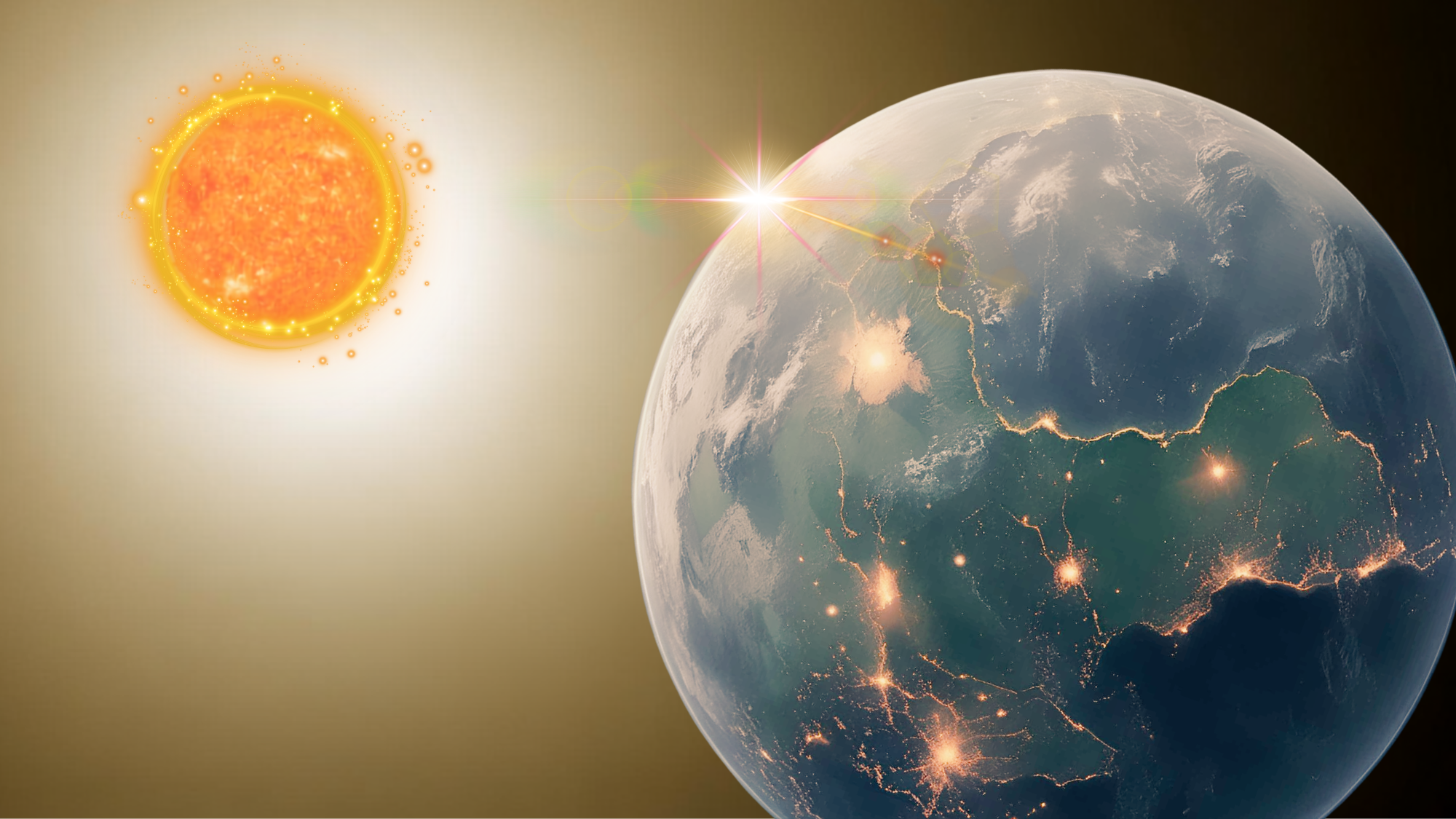
Scientists have released the sharpest images of the sun's surface ever captured. The photographs, taken by advanced solar telescopes, reveal structures smaller than anything previously visible—including tiny vortices swirling across the sun's photosphere. These aren't merely prettier pictures. The images show how plasma mixes and moves at scales researchers couldn't study before, exposing the mechanisms that drive solar activity and, ultimately, space weather that affects Earth. Understanding these processes could improve forecasts of solar flares and coronal mass ejections, which disrupt satellites and power grids. The vortices themselves—previously theoretical—are now documented in detail, confirming decades of predictions about how the sun actually works beneath what we thought we could see.

Space ↗

ScienceThe Guardian

‘You’re hit with a slam of shadow’: Nasa’s air mission to capture rare eclipse data

A NASA aircraft climbs through clear sky, instruments calibrated and ready. Below, the moon's shadow races across the earth at thousands of miles per hour. Inside the cabin, scientists watch their screens, waiting for those few minutes when day becomes night. Next week, a total solar eclipse crosses specific regions on August 12th. NASA's sending planes into the path of totality to capture data during those rare moments when the sun's corona becomes visible to instruments on the ground—and from the air. Most eclipse observations happen from fixed locations. Flying lets researchers chase the shadow itself, extending their window of observation and positioning sensors where the eclipse will be darkest and longest. The detail many miss: aircraft can actually outrun the eclipse's edge, buying extra seconds of data that stationary observers simply can't get. The planes will land with footage no one's collected quite this way before.

The Guardian ↗

ScienceNewser

People With Dog Allergies Can Snuggle Up to These 2 Beagles - Newser

Two gene-edited beagles named Bailey and Alfie produce significantly less of the protein that triggers dog allergies in humans. Scientists at the University of California used CRISPR technology to remove the gene responsible for secreting Fel d 1, the primary allergen found in dog saliva and skin. The sisters are healthy and indistinguishable from ordinary beagles to the naked eye. This follows similar work with cats, where researchers created hypoallergenic variants years ago. The team plans to study whether their approach could eventually lead to breeding programs that make allergic-friendly dogs more widely available to families who want them.

Newser ↗

ScienceSpace

The total solar eclipse on Aug. 12 will reveal something nobody has ever seen before

A total solar eclipse is coming August twelfth, and astronomers are preparing for observations they've never had the chance to make before. First, the eclipse will cross parts of the southern hemisphere, offering scientists a rare window to study the sun's corona with instruments positioned along the path of totality. Then, NASA's airborne mission will capture high-resolution data from above the clouds, where atmospheric interference won't blur the view. And finally, the alignment itself is unusual enough that researchers expect to detect solar features and behavior patterns that previous eclipses, observed from different angles and with older equipment, simply couldn't reveal. The event will last only minutes in any given location, which is why the preparation has been months in the making.

Space ↗

ScienceArs Technica

Europe's free satellite service just made it easier to track wildfires - Ars Technica

A satellite image loads on a screen somewhere in Europe. The pixels resolve into smoke, into flame, into the shape of a forest burning in real time. Someone zooms in. The detail sharpens. The European Commission's Copernicus program, which operates free satellite imagery for the continent, has released a new browser tool designed specifically to track active wildfires. It's a response to what's become a pattern: this year's wildfire season has already exceeded historical norms across southern Europe and beyond. The browser pulls data from multiple satellites and renders it as an interactive map, letting anyone—fire services, researchers, the public—see where fires are spreading as it happens. It's a small tool built for a growing problem.

Ars Technica ↗

ScienceArs Technica

The ultimate eclipse chase: A Concorde raced against the Moon's shadow - arstechnica.com

For decades, scientists have studied the Sun's corona—that luminous halo visible only during a total solar eclipse. The window's always brief. A few minutes from the ground, then darkness returns. That changed in 1973. A modified Concorde, fitted with specialized telescopes, chased the Moon's shadow across West Africa at twice the speed of sound. By flying alongside the eclipse path, the aircraft extended the observation window to over seven minutes. That extra time allowed researchers to capture the longest continuous imaging of the corona ever recorded, revealing details about its structure and behavior that ground-based observations simply couldn't match. The flight remains one of the most ingenious pieces of eclipse science ever attempted.

Ars Technica ↗

ScienceWIRED

Here Are the First Images of the Crater Left on the Moon by SpaceX’s Rocket

A crater sits on the lunar surface now, roughly 10 meters across, its edges still sharp against the gray regolith. A South Korean satellite captured it before and after—the before showing undisturbed ground, the after showing what remains when a SpaceX Falcon 9 upper stage struck the moon in March at nearly 2,600 meters per second. NASA had been tracking the debris for months, expecting impact but unable to prevent it. The crater itself isn't unusual; what matters is that we're watching it. The images mark the first time a deliberate lunar collision's full record has been documented from orbit. The moon keeps its scars. We're simply learning to read them now.

WIRED ↗

ScienceNewser

Scientists Confirm Darwin Hunch 150 Years Later - Newser

Darwin suspected it. A hundred and fifty years later, scientists have confirmed that carnivorous plants really do digest meat. The finding comes from researchers at the University of Bristol, who analyzed the digestive enzymes in sundews and butterworts—plants that trap and consume insects. What Darwin intuited from observation, modern genetic sequencing now proves: these plants produce the same protein-breaking compounds that carnivorous animals use. The enzymes evolved independently, which is remarkable. It means plants didn't borrow the trick from somewhere else—they invented it themselves. For botanists, it settles a long-running question. For the rest of us, it's a reminder that Darwin's hunches, even the strange ones, usually held up.

Newser ↗

ScienceSpace

NASA's SkyFall Mars helicopters will wear tiny capes

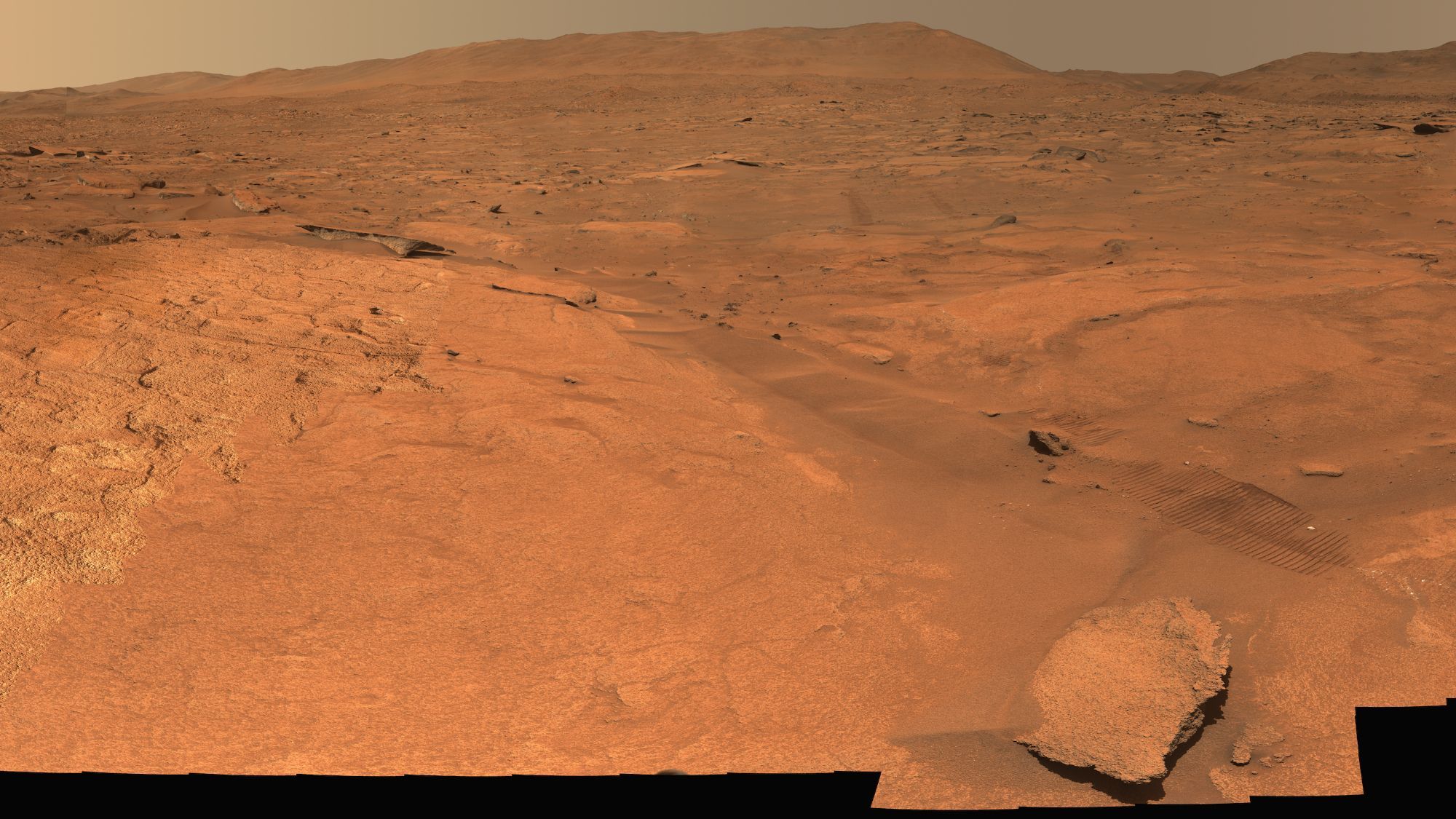
NASA's next generation of Mars helicopters will carry instruments designed to detect subsurface water on the red planet. The agency's SkyFall mission, still in development, aims to improve on Ingenuity, the small rotorcraft that exceeded all expectations during its time on Mars. Now there's a practical problem to solve. Engineers have fitted these new helicopters with tiny capes—reflective material that'll shield their sensitive radar antennas from the Martian dust and temperature swings that can degrade performance. The capes are part of a broader effort to make the helicopters more resilient. Testing shows the antenna's survived the equivalent of two hundred simulated Mars landings. SkyFall's expected to launch within the next few years, searching for water signatures that could inform future human missions.

Space ↗

ScienceYahoo

New Moon crater revealed in first pictures of Space X crash

A SpaceX rocket stage hit the moon last month, and the impact left a crater larger than expected. The debris came from a Falcon 9 upper stage that had been drifting in space since 2015. When it finally struck the lunar surface near the Hertzsprung crater, telescopes on Earth captured images showing the collision had gouged out a crater roughly 66 feet across. Scientists say the impact was more forceful than models had predicted, which raises questions about how orbital debris behaves after years in space. It's a reminder that even discarded rocket parts, once they're headed toward the moon, can leave a mark.

Yahoo ↗

ScienceUSA Today

A partial solar eclipse is approaching. See which states can view it

People across the northern United States are setting alarms for early morning on August twelfth. They're checking weather forecasts, clearing their schedules, waiting for the moon to slide in front of the sun. A partial solar eclipse will be visible across much of North America that day. The coverage won't be total—the moon won't completely block the sun's disk—but observers from the Pacific Northwest down through the Great Plains and into the Northeast will see a noticeable bite taken out of it. The farther north you are, the deeper that bite becomes. One detail worth noting: a small Spanish village will experience something unusual that night—darkness falling twice in a matter of hours, thanks to the eclipse's timing and local geography. The eclipse peaks in the early morning hours. Clear skies will matter more than location.

USA Today ↗

ScienceGiantfreakinrobot.com

Scientists Revive Extinct Animal Frozen For Almost 50,000 Years - Giant Freakin Robot

Scientists in South Korea have revived cells from a woolly mammoth frozen in Siberian permafrost for nearly fifty thousand years. The team extracted viable genetic material and grew it in mouse cells, demonstrating that dormant DNA can still function after extreme preservation. This marks the first time researchers have successfully activated mammoth cells in a living organism, though the animal itself wasn't cloned. The work builds on decades of permafrost research and offers a test case for understanding how ancient biological material behaves when thawed. The team plans next to attempt more complex cellular resurrection, though a full mammoth remains far beyond current capability.

Giantfreakinrobot.com ↗

ScienceLive Science

NASA grants Voyager 2 probe another year of power with risky 'Big Bang' maneuver. Now, will it work for Voyager 1?

A spacecraft built in the nineteen-seventies, now forty-seven years into its journey, receives a signal from Earth. Engineers on the ground have asked it to do something it was never designed to do. NASA's Voyager 2 probe, deep in interstellar space, has just executed what engineers call a "Big Bang" maneuver—a controlled firing of thrusters to realign its antenna toward home. The move bought the probe another year of power and science operations. Voyager 2 launched in 1977 and has been transmitting data across billions of miles ever since. The real question now is whether the same trick will work on its twin, Voyager 1, which sits even farther out and faces its own power crisis soon. Both probes are running on fumes. Whether either survives much longer depends on whether Earth can keep talking to them at all.

Live Science ↗

SciencePhys

South Korean satellite captures before and after views of SpaceX rocket's moon crash

A South Korean satellite has photographed the impact crater left by a SpaceX rocket that struck the moon in March 2022. The Falcon 9 upper stage hit the lunar surface at roughly five thousand four hundred miles per hour, creating a debris field visible in images taken by Seoul's Lunar Reconnaissance Orbiter. The before and after photos show the crater and surrounding ejecta in detail—the kind of evidence that helps scientists understand how objects collide with airless bodies. It's a reminder that even spent rocket stages, once their work is done in Earth orbit, eventually find their way down. In this case, they simply came to rest a quarter million miles away.

Phys ↗

ScienceArs Technica

The world’s biggest solar telescope caught vortexes on the Sun’s surface

The Daniel K. Inouye Solar Telescope in Hawaii has captured the first direct images of vortexes swirling across the Sun's surface. These aren't random disturbances—they're Kelvin-Helmholtz instabilities, a fluid dynamics phenomenon where layers of plasma moving at different speeds create spinning patterns, much like eddies in a river. Scientists have long suspected these vortexes existed, but the telescope's unprecedented resolution finally made them visible. Understanding how these instabilities mix plasma and transport energy could reshape how we model the Sun's behavior and predict solar storms that affect Earth. For decades, theorists watched for these vortexes. Now they're watching them spin.

Ars Technica ↗

ScienceSpace

Total solar eclipse Aug. 12, 2026 live updates — 5 days to totality

For the past two centuries, Spain and the Channel Islands have waited for the sun to vanish in daylight. That moment arrives in five days. On August twelfth, a total solar eclipse will cross the Atlantic and European coastlines, with totality lasting up to two minutes and twenty seconds depending on location. The Spanish village of Castellón de la Plana sits directly in the path, as do the Channel Islands between Britain and France. Astronomers note this eclipse won't return to Western Europe for another eighty-three years. Observers in the path of totality will experience near-total darkness at midday. Those outside it will see only a partial eclipse.

Space ↗

Your brief, every morning

theBrief turns headlines like these into a personal audio show. Your topics, your length, CarPlay included.

Download on the App Store