theBrief. Get the app

Space — Monday, August 10, 2026

Space,
briefly.

18 stories, written and narrated in a calm newsroom voice. No sirens, no outrage bait — press play and let the edition carry you through.

Space

SpaceOrlando Sentinel

SpaceX scrubs Monday launch with busy August on tap including Falcon Heavy mission for NASA

A launch pad at Cape Canaveral sits empty this morning. The countdown that was meant to begin has been postponed. SpaceX scrubbed its Monday launch, pushing the mission back as the company works through a busy August schedule. The delay clears the calendar for what's ahead: a Falcon Heavy mission for NASA, the company's most powerful operational rocket. That flight carries instruments and supplies bound for the International Space Station. The exact timing of the rescheduled launch hasn't been announced yet, but SpaceX typically completes these turnarounds within days. For now, the pad waits.

Orlando Sentinel ↗

SpaceAssociated Press

How to spot the Perseid meteor shower, a summer light show that promises to dazzle - AP News

The sky darkens. A meteor streaks across it—silent, brief, gone. Another follows. Then another. The night fills with light that asks nothing of you but attention. The Perseid meteor shower peaks Wednesday night, and conditions are unusually good this year. A new moon means no moonlight will wash out the display. NASA estimates fifty to a hundred meteors per hour are visible under ideal conditions—which means dark skies, away from city lights, and patience after midnight. The shower itself is debris from the Swift-Tuttle comet, dust particles burning as they enter Earth's atmosphere. It happens every August. This year, you'll actually see it. Find a dark spot. Look up. Wait.

Associated Press ↗

SpaceFinancial Times

Europe faces rocket launcher shortage by 2030, space agency chief warns

Europe's space chief says the continent won't have enough rockets to launch its satellites by the end of the decade. Josef Aschbacher, director of the European Space Agency, told the Financial Times that without new heavy-lift launchers in service by 2030, Europe risks losing access to space altogether. The problem's immediate: Arianespace, which operates Europe's main Ariane 5 rocket, retires it this year. A successor, Ariane 6, won't be ready until late 2024 at the earliest, leaving a gap when demand for commercial and government launches is rising. European governments and private companies are racing to fill that gap, but the timeline's tight. Without operational rockets in the next few years, Aschbacher warns, Europe could find itself dependent on American or Chinese launch providers for missions it currently controls itself.

Financial Times ↗

SpaceSpace Daily

NASA's first Space Shuttle launch lost 16 heat shield tiles and damaged 148 more before it even left the ground, not from any failure, but from the shock wave of its own engines bouncing back off the launch pad

NASA's first Space Shuttle launch damaged hundreds of heat shield tiles on the launchpad before the spacecraft ever left the ground. Sixteen tiles were lost entirely, and another hundred and forty-eight were damaged by the shock wave from the shuttle's own engines reflecting back off the concrete pad. The damage wasn't caused by any mechanical failure—it was the acoustic environment of the launch itself, a problem engineers hadn't fully anticipated. NASA inspected the tiles and determined the shuttle was safe to fly, though the discovery led to design changes for future launches to protect the thermal protection system from its own engine noise.

Space Daily ↗

SpaceSpace

On this day in space! Aug. 9, 1976: Soviet Luna 24 sample return probe launches to the moon

Luna 24 lifted off from Earth on August ninth, nineteen seventy-six, carrying Soviet ambitions to the lunar surface one final time. The probe was designed to land in the Sea of Crises, drill into the moon's regolith, and return samples to Earth—a mission that would prove to be the last of the Luna program's sample-return attempts. It succeeded where others had failed, collecting 170 grams of lunar material before the spacecraft made its way home. That small payload represented the end of an era. The Soviets would never send another crewed or uncrewed mission to the moon. Luna 24's samples remain among the last material brought back from that distant world.

Space ↗

SpaceFlorida Today

SpaceX rocket launch from Florida on first day of school. What to know.

SpaceX has been launching rockets from its Florida facility for years, part of the steady cadence of commercial space missions that've become routine along the coast. Today, though, the timing's worth noting. A Falcon 9 rocket is scheduled to lift off from Cape Canaveral during the morning hours on the first day of the school year across much of Florida. The launch window typically lasts several hours, which gives schedulers some flexibility, but it does mean families heading to school might see the rocket's ascent or its contrail against the sky. Local officials have coordinated with SpaceX on timing to minimize disruption. For most residents, it'll be a brief interruption—a reminder that space operations and everyday life share the same patch of ground.

Florida Today ↗

SpaceKTLA

SpaceX launches 50th rocket from West Coast this year

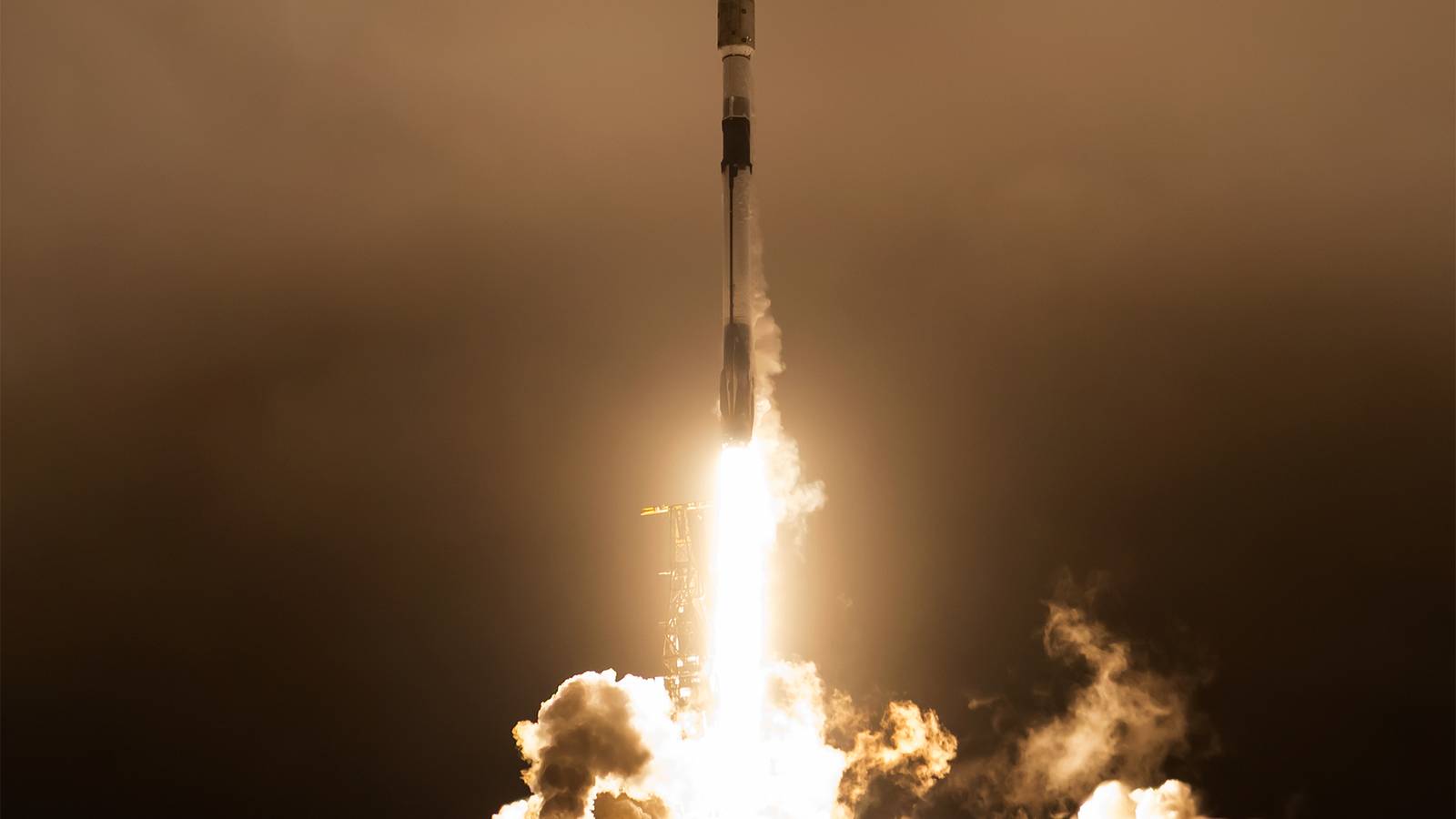
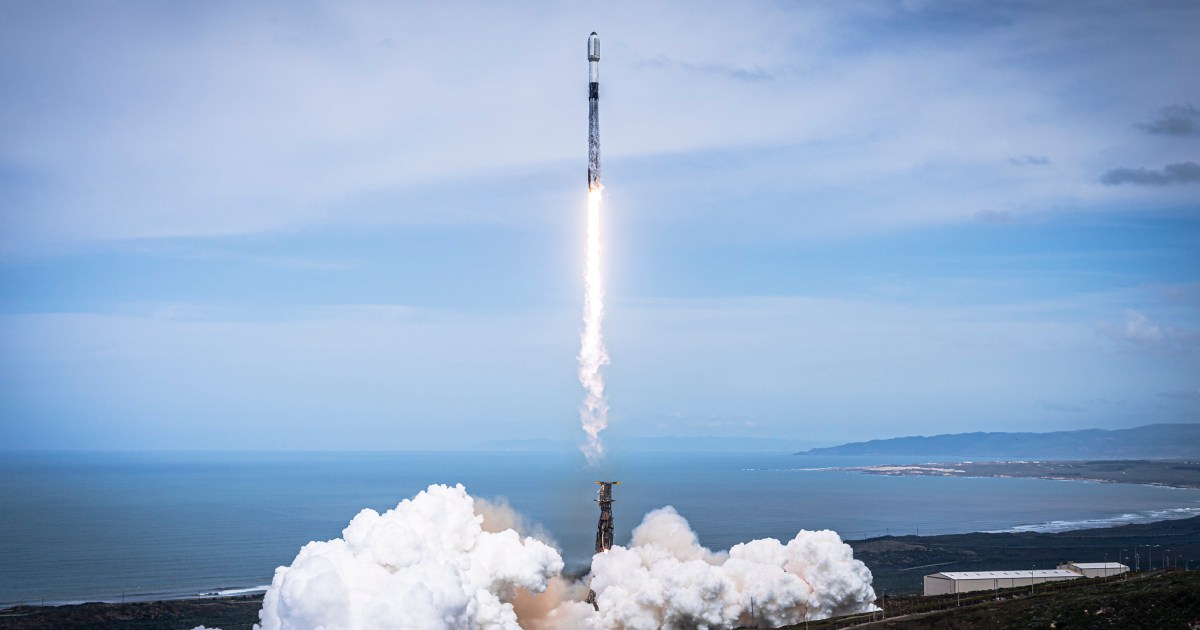
SpaceX launched its fiftieth rocket from the West Coast this year. The Falcon 9 lifted off from Vandenberg Space Force Base in Santa Barbara County, carrying Starlink satellites into orbit. That's roughly one launch every three days since January. The company's cadence has accelerated steadily — last year at this point, SpaceX had completed thirty-four launches from the same site. Each Falcon 9 carries dozens of satellites designed to expand global internet coverage, part of a broader effort to build out Starlink's constellation. The pace reflects both improved launch operations and growing demand for satellite internet, particularly in remote areas. Fifty rockets in a single year from one location underscores how routine space access has become for SpaceX, even as the industry remains young.

KTLA ↗

SpaceCNN

Risky mission to save NASA’s falling observatory faces issues of its own - CNN

NASA's IXPE observatory has been losing altitude for months, its orbit decaying toward Earth. A rescue mission was planned to boost it back to safety. This week, the spacecraft meant to perform that rescue spun unexpectedly out of control. The servicer satellite, built by Northrop Grumman, experienced a propulsion anomaly that sent it tumbling. Mission controllers have regained partial contact and are working to stabilize it. They haven't abandoned the effort to save IXPE, but the timeline and approach are now uncertain. The observatory continues its slow descent while the team assesses whether the rescue can still proceed.

CNN ↗

SpaceForbes

NASA’s Roman Space Telescope To Launch This Month — Nine Months Ahead Of Schedule

NASA's Roman Space Telescope has been in development for over a decade, designed to map dark matter and search for distant exoplanets across the cosmos. The mission faced the usual delays and budget pressures that plague large space projects. That changed this week. NASA announced the Roman telescope will launch this month—nine months earlier than the previously scheduled date. The shift comes after engineers completed critical assembly work ahead of plan at the Goddard Space Flight Center in Maryland. The telescope's primary mirror, nearly three meters across, is now ready for deployment. This acceleration means the hunt for habitable worlds and answers about the universe's invisible architecture begins sooner than expected.

Forbes ↗

SpaceSpaceflight Now

Live Coverage: SpaceX West Coast launch surge continues with Starlink mission

A rocket stands vertical on the California coast, engines cooling in the pre-dawn air. In a few hours, it'll carry another batch of Starlink satellites into orbit. SpaceX has been launching at an accelerating pace from its Vandenberg Space Force Base facility on the West Coast. Today's mission continues that rhythm—another Falcon 9 lifting off with dozens of internet satellites bound for low Earth orbit. The company's been running these missions roughly every week or so now, part of its effort to expand global broadband coverage. What's less noticed: each launch also tests SpaceX's ability to land and refly the same booster. That's where the real economics live. The satellite constellation keeps growing. The launches keep coming.

Spaceflight Now ↗

SpaceSpace

'Not looking good right now': Starship likely to be lost at sea 2 weeks after epic 13th test flight, Elon Musk says

SpaceX's Starship is expected to be lost at sea following its thirteenth test flight, according to Elon Musk. The vehicle completed its latest test two weeks ago, but Musk said on social media that conditions don't look favorable for recovery. The ship had achieved several milestones during the flight, including a successful booster catch. SpaceX has recovered Starship hardware from previous tests, though not consistently. The company will attempt to salvage what it can before the vehicle is lost, and engineers will use data from this flight to inform the next test, likely scheduled for early next year.

Space ↗

SpaceSpace Daily

Earth's core holds enough gold to cover every continent in a layer 50 centimetres deep, but until volcanic rocks from Hawaii were analysed in 2025, geologists assumed it was sealed away forever — the core turns out to be leaking - Space Daily

Earth's core holds enough gold to cover every continent in a layer fifty centimetres deep. Until this year, geologists thought it was locked away forever. But analysis of volcanic rocks from Hawaii in 2025 revealed something unexpected: the core is leaking. Researchers found ruthenium isotopes in those rocks—a signature of material that originated in Earth's interior and migrated upward through the mantle. The study didn't detect gold itself in transit, but the isotope evidence proves the barrier between core and crust isn't absolute. Material does escape. It's a reminder that what we think of as sealed away often isn't. The core's riches remain out of reach, but they're moving.

Space Daily ↗

SpaceFlorida Today

After milestone landing, SpaceX Starship recovery efforts take a turn

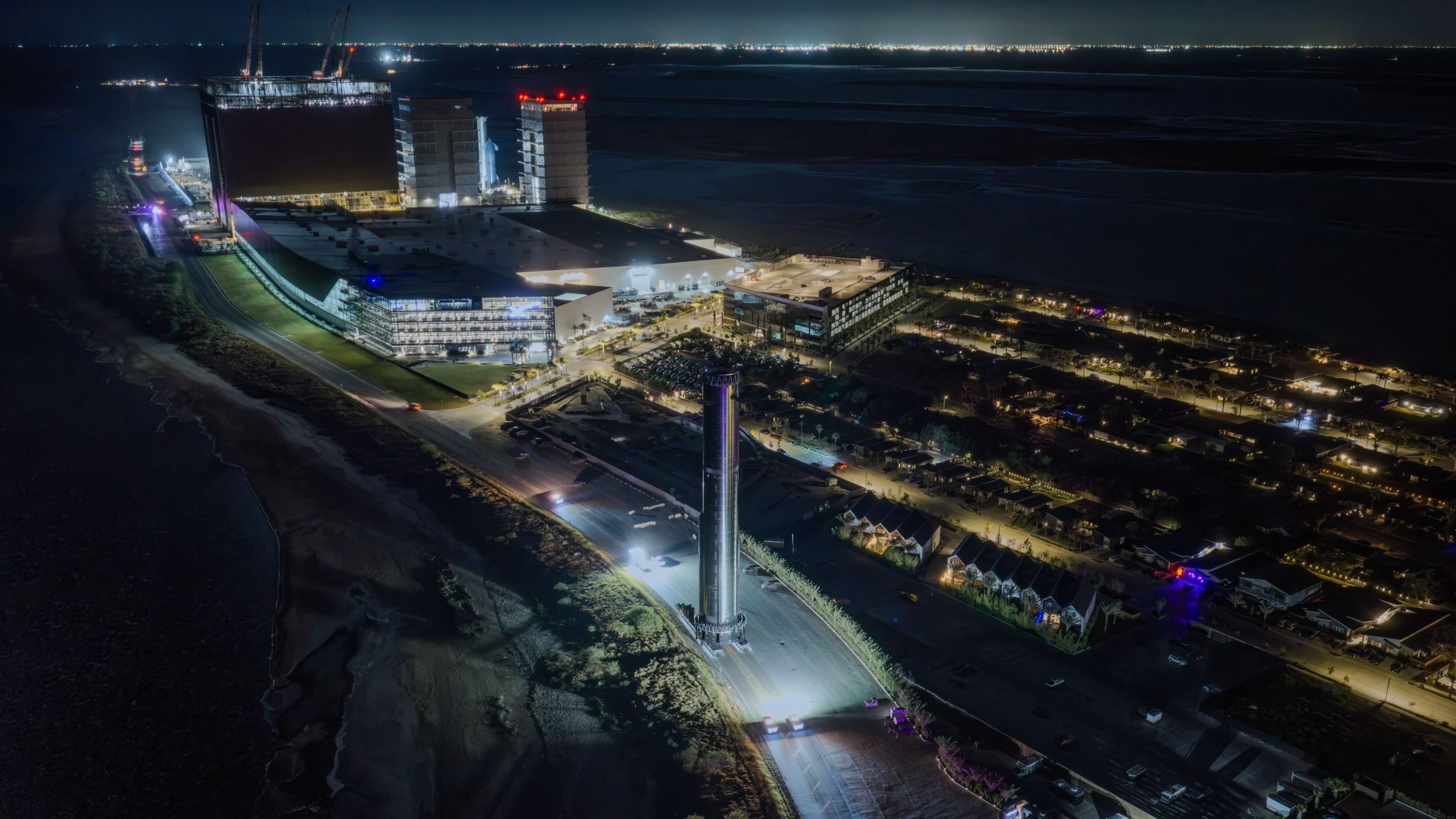
SpaceX has been working toward a fully reusable Starship system for years, with the goal of catching the rocket's booster mid-air during launch. That's proven harder than the landings themselves. Now there's a shift in approach. The company's latest recovery attempt, following its most recent test flight, didn't go as planned. Rather than pursue another catch, SpaceX is pivoting to controlled ocean landings for the booster, buying time to refine the catching mechanism. The move reflects a practical reality: perfecting one piece at a time beats rushing an incomplete system. Engineers will use the ocean landing data to improve the catch hardware before attempting the maneuver again. It's a deliberate pace that suggests confidence in the eventual goal, even if the path there's become longer.

Florida Today ↗

SpaceNBC News

Environmental groups challenge FCC approval of startup’s plan to beam on-demand sunlight from space - NBC News

For years, the idea of harvesting solar energy in space and beaming it back to Earth has lived in the realm of theory—promising in principle, but technically unproven and legally untested. The FCC approved a startup's plan to test the concept this week. Now environmental groups are pushing back. They've filed challenges arguing that a single test mission, planned by the company Caltech Ventures, could normalize the technology and lead to approval of a far larger satellite constellation later. The groups worry about orbital debris, interference with astronomy, and the precedent of allowing private companies to operate power stations in space without full environmental review. The FCC's decision stands for now, but the legal challenge could delay or reshape how future space-based solar projects are evaluated.

NBC News ↗

SpaceSpace

Engineers race to save stricken LINK rescue spacecraft before it's too late

Engineers at mission control are working to restore power and communications to the LINK rescue spacecraft, which lost contact with Earth earlier this week. The vehicle, designed to retrieve stranded astronauts from the International Space Station, experienced a critical systems failure during its approach trajectory. Teams have narrowed the problem to a faulty power distribution unit and are uploading new software commands to bypass the damaged component. This marks the second rescue mission to encounter hardware failures in the past eighteen months. If engineers can't restore full functionality within the next seventy-two hours, the mission will need to be postponed, delaying the planned crew evacuation by several weeks.

Space ↗

SpaceThe Desert Sun

SpaceX eyes weekend rocket launch at Vandenberg. How to watch live

SpaceX is preparing to launch a Falcon 9 rocket from Vandenberg Space Force Base in California this weekend, carrying a payload of Starlink satellites into orbit. The company's been ramping up its launch cadence from the central coast facility, which has become one of its primary hubs for polar and near-polar missions. First, the launch window opens Saturday morning, though weather conditions often push these operations into Sunday or beyond. Then there's the matter of the booster itself—SpaceX plans to land it on a drone ship in the Pacific, a recovery that'll add another flight to its reusable rocket fleet. And finally, the company's streaming the whole thing live on its website and X, starting about fifteen minutes before liftoff, so you can watch from home if you're up early enough. Vandenberg's become quieter in recent years as SpaceX concentrated launches elsewhere, so weekend activity there still draws local attention.

The Desert Sun ↗

SpaceSpace

Chinese company Landspace targets Aug. 10 for historic rocket launch and landing attempt

China's private space company Landspace is preparing for a launch attempt on August tenth that would mark the first time a Chinese commercial firm has landed a rocket booster on the ground. The company's Zhuque-2 rocket will carry a satellite to orbit while attempting to recover its first stage through a controlled landing—a technique SpaceX pioneered years ago but remains technically demanding. Landspace has been developing this capability for several years, and success would demonstrate that China's commercial space sector has closed a significant gap with international competitors. The recovered booster could then be refurbished and reflown, reducing launch costs substantially. This test comes as Beijing continues to encourage private investment in space technology, a sector long dominated by state-owned enterprises.

Space ↗

Spacenny360

SpaceX knocks out 50th launch on Space Coast this year

A rocket rises from the Florida coast in the pre-dawn dark, its engines cutting through salt air. Another one. The fiftieth this year from SpaceX's launch facilities on the Space Coast. The company's been running a pace that's reshaped what's possible in spaceflight. Fifty launches from a single operator in twelve months — that's roughly one every week. Most carry Starlink satellites into orbit, part of SpaceX's effort to build a global internet network. A few have flown national security payloads or commercial cargo. What's worth noting: this cadence would've seemed impossible five years ago. The reusable rocket technology that makes it routine is still being refined in real time. The launches continue. The pace holds.

nny360 ↗

Your brief, every morning

theBrief turns headlines like these into a personal audio show. Your topics, your length, CarPlay included.

Download on the App Store